
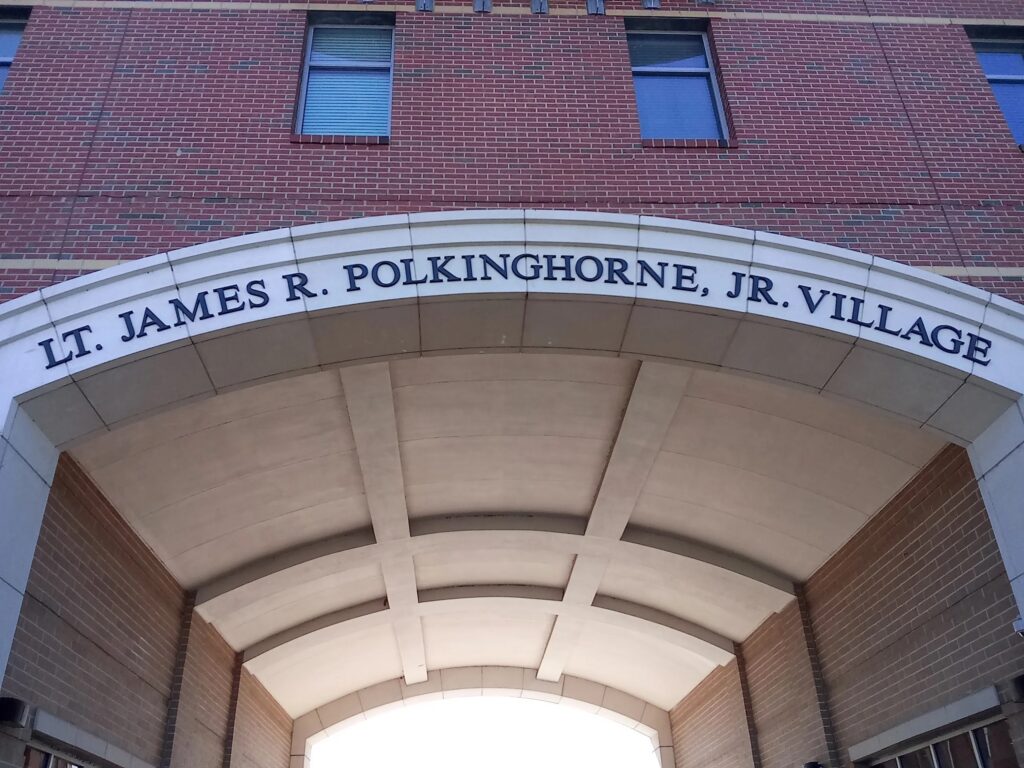
Polkinghorne Village at Florida A&M University is known as one of the nicer places for students to live on campus. It is often advertised as modern, safe, and worth the high cost. However, that image was challenged on Sunday, Feb. 1, during the early afternoon, when pipes burst during a sudden freeze, causing major flooding throughout the building.
Students said the flooding occurred during the February cold snap and affected multiple floors, from the third floor down in the middle section of Polkinghorne Village. According to residents interviewed, the third floor was impacted the most, with several students being forced to move out of their dorm rooms entirely.
The flooding forced students to leave their rooms, damaged personal belongings, and left many unsure about what would happen next. Some ceilings partially collapsed, and water damage spread through walls and hallways. Students living on the third floor in the middle section had to remove their belongings and relocate, at least temporarily. Rooms were cleared out, and personal items were left exposed while maintenance crews assessed the damage.
Calvin Lindsey, a second-year Health Science major from Atlanta, was not on campus when he first heard about the flooding. Lindsey lives on the first floor, so his initial concern was that his room would be hit the hardest. He contacted his roommate to check on the condition of their room, and his parents also reached out to make sure everything was okay.
Although his room did not suffer significant damage, Lindsey said the situation was concerning. When he returned to campus the following day, maintenance workers were knocking on doors and using thermal devices to check for hidden water damage inside the walls. Parts of drywall had been cut open, and large drying machines were placed throughout the building.
Even days after the incident, Lindsey said repairs were still ongoing. Elevators were temporarily unavailable, and certain areas, including stairwells and the lobby, were restricted. Despite visible work being done, Lindsey said communication from housing felt limited.
“There was one email about relocation,” Lindsey said, “but after that it just felt like they were doing things without really explaining what was happening.”
Antonio Leach, a second-year mechanical engineering student from Washington, D.C., returned to campus after the flooding had already occurred. He said the damage was noticeable immediately upon entering the building. Strong odors lingered in the hallways and inside some rooms, which he described as similar to sewage.
Leach said he regularly walked past rooms on the third floor that had been completely cleared out. He observed that several residents, including members of the football team, were forced to move out after ceilings caved in and water damage spread through their living spaces.
“I feel like something like that shouldn’t happen when we pay this much,” Leach said, referring to the high cost of living in Polkinghorne Village.
Students also questioned whether residents should be compensated for the damage and displacement. Lindsey said students who were relocated or whose belongings were damaged should not be responsible for replacing items out of pocket. Leach agreed, noting that in most off-campus rental situations, tenants would expect some form of reimbursement for structural damage beyond their control.
Beyond the flooding itself, both Lindsey and Leach pointed to ongoing maintenance issues that existed prior to the incident. Lindsey described freezing cold water during already cold weather, along with occasional air conditioning failures. Leach mentioned elevators frequently being out of service, sometimes as often as once a week. He said broken elevators during emergencies could pose safety concerns, especially for students living on higher floors.
Resident Assistant Usher Williams said the flooding required immediate coordination between housing officials and student staff. Williams assisted residents during evacuations and worked to ensure safety procedures were followed. He explained that resident assistants were responsible for checking on students and helping manage confusion during the relocation process.
Williams acknowledged that while maintenance crews responded after the damage was discovered, the incident revealed a need for stronger preventative measures and clearer communication moving forward.
Students remain hopeful that improvements will be made but remain cautious. Lindsey said enforcement and attention often increase immediately following an incident, but long-term changes are not always guaranteed. Leach expressed similar concerns, saying he hopes the situation leads to lasting improvements rather than temporary fixes.
For residents of Polkinghorne Village, the flooding was more than just a maintenance issue. It raised concerns about safety, accountability, and whether campus housing is truly prioritizing student well-being. As Florida A&M University continues to grow, students believe maintaining safe living conditions for current residents should remain a priority. For those who were displaced from their dorm rooms, the experience was not just inconvenient, it was personal.