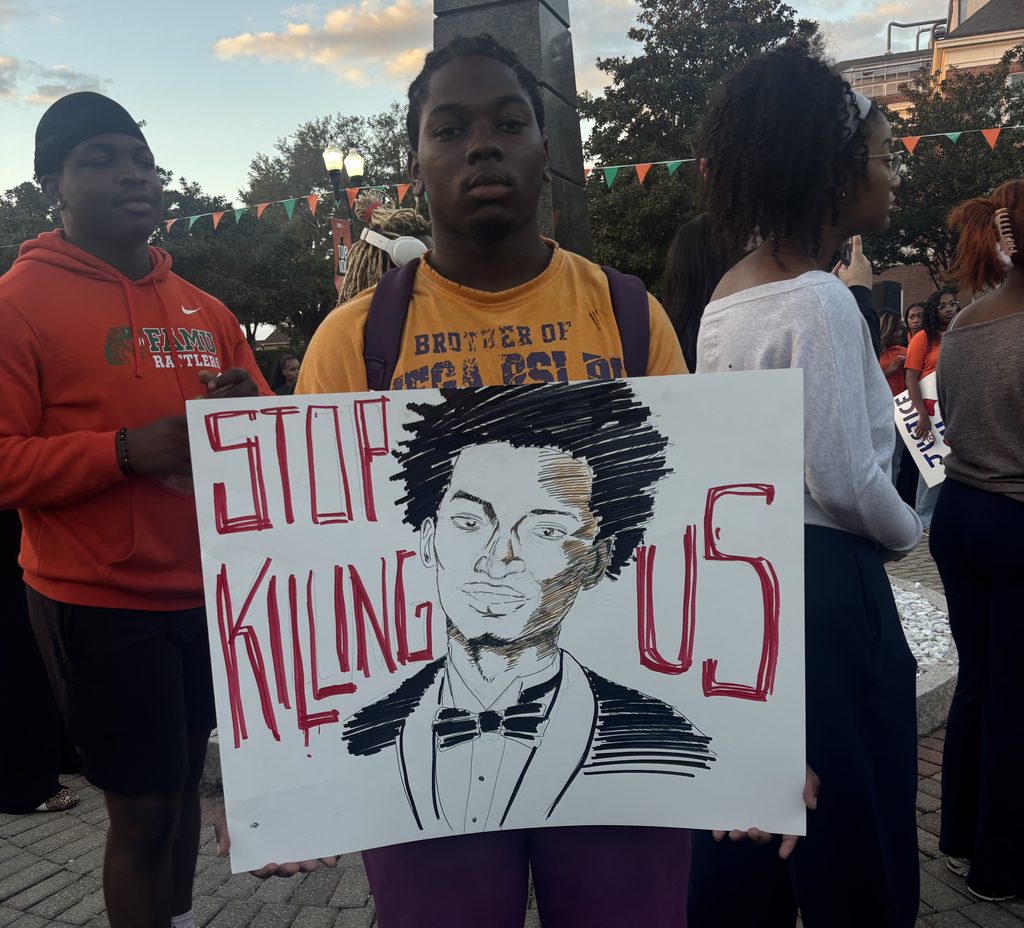
“No justice, no peace” and “We want justice, how ’bout you?” echoed through a Walk for Justice as Florida A&M University students and Tallahassee community leaders gathered to honor Nolan Wells and call for accountability following his death.
Participants also chanted “Nolan Wells!” as speakers encouraged the crowd to keep attention on his case and broader concerns about racial injustice.
The event was organized by Miya Dennis, FAMU student and South Regional director for Helping Black Communities Unite Inc. Dennis said she felt compelled to organize the walk after seeing posts about Wells online and reflecting on FAMU’s history of activism and social justice.
“Racial discrimination can often turn into violence very quickly,” Dennis said.
Dennis said organizers worked with student and community groups to spread awareness and encourage participation. Their goal, she said, was to keep Wells’ case in the public conversation and support his family as they continue seeking answers.
“We do not go silent. We do not allow names to go cold,” Dennis said. “We continue to put pressure on the judicial system.”
Wells, an 18-year-old Black college football player, was last seen on Horn Island off the Mississippi Gulf Coast on July 4, 2026. His body was found in the water two days later. The state medical examiner classified his cause and manner of death as undetermined.
A grand jury later declined to bring criminal charges in connection with his death. The circumstances have drawn public concern, with supporters continuing to call for answers and accountability.
At the walk, Kennedy Williams, FAMU’s student body president and a senior history and pre-law student from West Palm Beach, Florida, urged attendees to turn their concerns into action.
“And frankly, I’m tired of being sick and tired,” Williams said.
Williams spoke about Wells’ future and the opportunities he would no longer have, urging attendees to remember that the case represented a family grieving a young person whose life ended too soon.
“Hope without action is a wish and justice without power is an empty promise,” Williams said.
Williams also encouraged students to participate in civic life and use their voices to challenge injustice. She called on attendees to carry their concerns beyond the gathering rather than allowing the event to become a temporary expression of frustration.
For students Maya Williams and Angelina Jean, attending the walk was an opportunity to raise awareness and show solidarity with the Black community.
Maya Williams said she wanted Black children and adults to have the opportunity to grow older and receive justice when they experience discrimination. She also emphasized that meaningful change does not have to come through violence.
“I just want people to see that it’s not always violence that has to happen for us to be able to make a change,” she said.
Jean said she was concerned that incidents involving Black people can be overlooked, leaving families and communities feeling unheard. She said gatherings like the walk can help people recognize their ability to speak up and challenge that pattern.
“Somebody speaking up and not letting it get thrown under the rug is important,” Jean said.
Jean added that even when only a small group of students participates, bringing attention to an issue can help keep it in the public conversation.
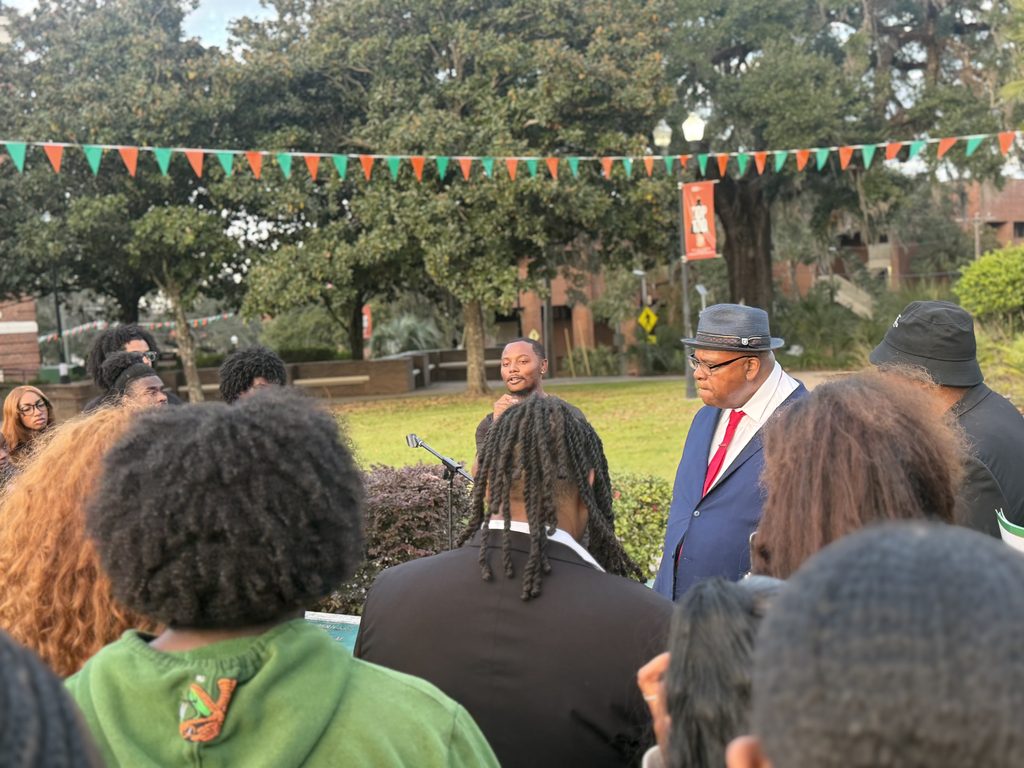
Curtis Taylor, president and CEO of the Tallahassee Urban League, also addressed the crowd, emphasizing voting, civic engagement and community responsibility. He encouraged attendees to vote in every election and to hold elected officials accountable.
Taylor also discussed gun violence and the importance of community members taking action when they become aware of potential dangers. His remarks connected the call for justice with broader questions about how communities can work to prevent violence and demand accountability from public officials.
For Dennis, the walk was not intended to be a one-day demonstration. She said keeping Wells’ name in the public conversation was central to the effort, particularly as attention shifts away from cases that have not been resolved to the satisfaction of families and supporters.
The chants and speeches reflected the participants’ determination to keep speaking out. Attendees gathered not only to remember Wells but also to express concerns about racial injustice and the need for continued public attention.
“We will not let this go cold,” Dennis said.