
Plant Uniform is anything but the average clothing brand. The first time I saw one of Bakari’s pieces, I realized it was deliberately distinct. As a Florida A&M University (FAMU) alum, Bakari still exudes that Rattler spirit through his work, making a statement with every piece.
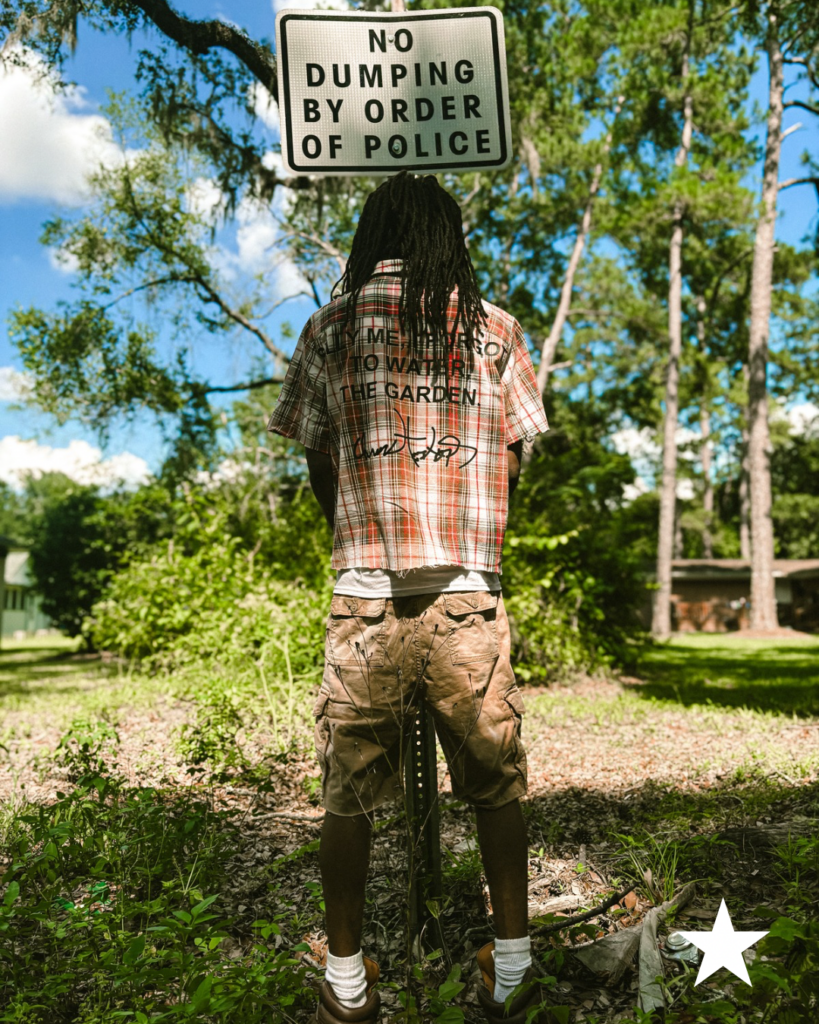
The shirt had a bohemian energy. It felt like it had lived a young, wild life, yet remained earthy and grounded. The tie-dye wasn’t bright, but it was intentional. It was sun-faded and muted, like the colors had been pulled straight from soil and sky. As Bakari puts it, “All my pieces have a story to tell, with the colors being a whisper of where they have been.”
Plant Uniform began with a simple idea. Bakari wanted to create something that felt honest and connected to the earth rather than rushed or mass-produced. What began as experimentation with old garments and natural dyeing developed into a brand rooted in patience, creativity, and trust in the process.
The details immediately stand out. The intentional cuts and carefully placed tears do not feel random or careless. Some areas are bleached to create harsh spots that traditional fashion might call mistakes. Other pieces are sun-dyed, left outside in the Florida heat until the fabric naturally shifts tones. “The sun and nature itself are the designers. I do what comes naturally to me,” Bakari says. “You can’t always dictate how it turns out, nor should you rush it either. You have to let Mother Nature do as she pleases.” Nothing about the clothing feels rushed or mass-produced—it feels cultivated.
Bakari does not simply make shirts; he reconstructs them. Using his creative eye, he reshapes shirts and pants, experimenting with proportions and structure to create something entirely new. Denim becomes patched and reworked, and old garments gain a second life. “Everything can be given purpose, so I try not to discard anything. I rarely see trash,” he explains. “I see a base. I see an object that needs to repurpose a skeleton that needs a new soul.” Every decision in the process feels intentional.
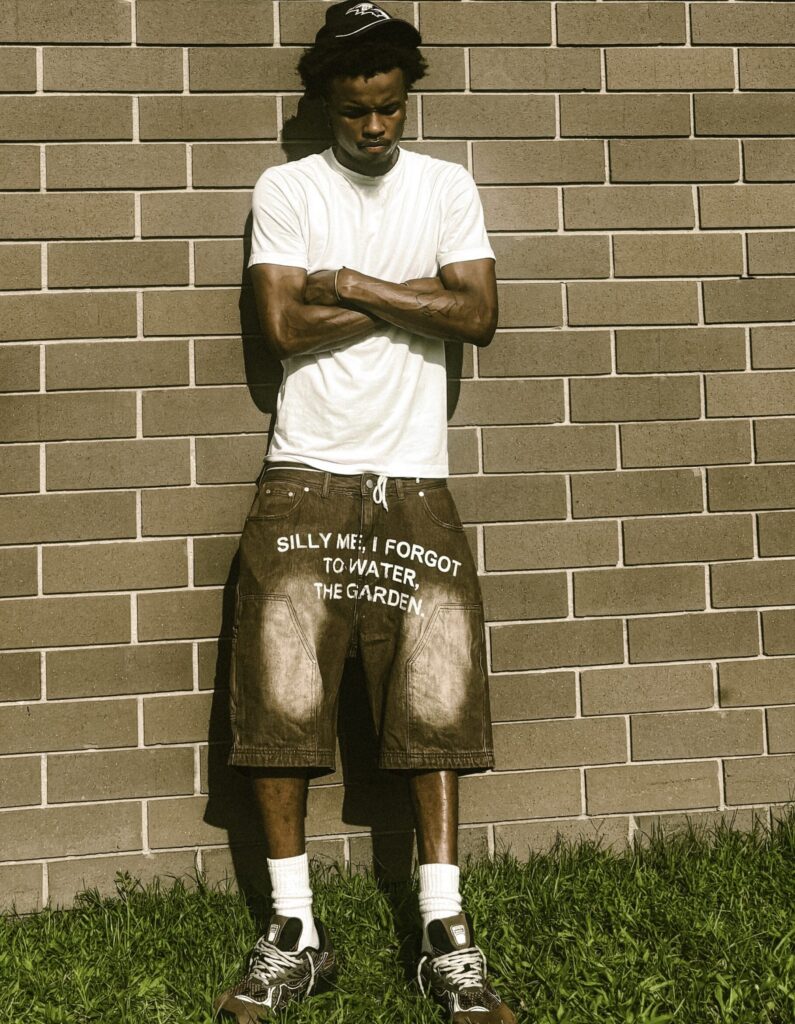
For many FAMU students, that intentionality is part of what makes the brand stand out. Zamir Johnson, a fourth-year music industry major at Florida A&M University who owns multiple pieces from Plant Uniform, says the clothing carries a different energy than most brands. “When you wear it, you feel like you want to attack the day,” Johnson said. “Every piece is raw. It’s art, but it’s also something you can live in.”
The brand centers on transformation, as Bakari breaks down old garments and rebuilds them. The distress is strategic, the dyeing process patient, and even the imperfections feel purposeful. That is what separates Plant Uniform from fast fashion—it embraces the beauty of becoming. “In a world obsessed with perfection, I try to glorify the imperfections that make something unique,” Bakari notes. “Finding beauty in the impurities.”
In communities where fast fashion dominates and trends change every few weeks, Plant Uniform introduces a different rhythm. It encourages people to slow down and appreciate the craft behind clothing. The brand blends urban culture with sustainability without sounding preachy or distant. There is also something powerful about seeing a brand like this come from a Florida A&M alum. It reinforces the idea that innovation and ownership grow from HBCU soil.
Micah Askew, a second-year business administration student at FAMU and repeat Plant Uniform customer, says the clothing has become part of his everyday lifestyle. “It’s not just about clothes,” Askew said. “When you buy something from Plant Uniform, you know you’re supporting someone who’s putting a piece of himself into the clothing. It feels real and tangible. That’s what makes people keep coming back.”
“Sustainability isn’t a trend; it’s a way of life,” Bakari insists. “It shouldn’t feel inauthentic. It should be the standard.”
Building a sustainable clothing brand is not easy. Sourcing quality garments and working with natural dyes in small batches takes time and effort. It is not the fastest way to make money, but that is not the point—the goal is impact and ownership. “I’m building something real from the ground up. It’s not just a business,” Bakari says. “If someone wears my clothes and feels a genuine connection with the mission, and like they have a piece that is irreplaceable, I’ve won.”
Plant Uniform proves that sustainability does not have to look sterile or corporate. It can look textured, worn-in, and intentional. Most importantly, it exists in its own lane without asking permission. And as a Florida A&M University graduate, Bakari’s work stands as another reminder that Rattlers do not just follow culture—we create it.