
Florida A&M University’s annual Harambee Festival returned to campus this year with music, art, and local businesses filling the university’s amphitheater; a shift in location that organizers say brought the celebration closer to the heart of the Rattler community.
“Harambee means ‘all pull together,’ and that’s exactly what this festival represents,” said event coordinator Vernon Bryant. “It’s about bringing the culture, the businesses, the students, and the community into one space to celebrate who we are.”
Held Feb. 28, the festival welcomed an estimated 2,000 attendees and featured more than 50 vendors, live music, and performances from members of FAMU’s Greek life organizations. The event is a longstanding tradition celebrating Black culture, entrepreneurship, and community engagement.
This year marked a notable change in location. The festival was previously held at Cascades Park, but organizers moved it back to FAMU’s campus, hosting it at the amphitheater.
Bryant said the move was intentional.
“We wanted to bring Harambee home,” Bryant said. “FAMU has always been about community and culture, and having it here on campus allows students to experience it in a more personal way.”
The afternoon began with music from DJ Loose Kid, who opened the event and set the tone for the festival’s high-energy atmosphere. Longtime Marching “100” announcer Joe Bullard later took the stage, energizing the crowd as he introduced sponsors and welcomed community leaders.
Throughout the amphitheater, vendors lined the walkways selling food, handmade goods, and cultural items. The marketplace atmosphere created an opportunity for small businesses, particularly Black-owned businesses, to connect with customers and students.
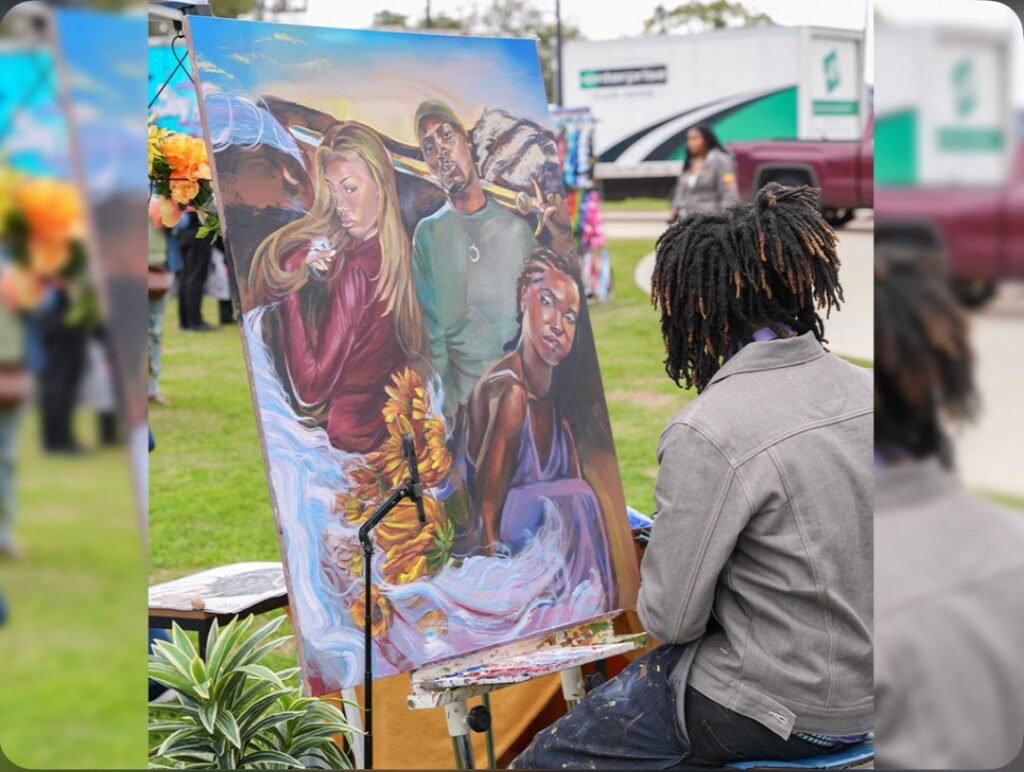
Among the vendors was FAMU junior Miles Mallory, a fine arts major who showcased his talents by live painting during the event.
Mallory worked steadily at his canvas as festivalgoers stopped to watch the piece come together in real time.
“As an artist, it means a lot to create in front of people and let them see the process,” Mallory said. “Events like Harambee give student artists a platform to share their work and be part of the culture here at FAMU.”
Mallory said the experience of painting live also helped him connect with attendees who might not normally interact with visual art.
“People come up, ask questions, and really engage with what you’re doing,” he said. “It reminds you that art is meant to be shared.”
For longtime vendors, the festival also provides an opportunity to maintain lasting relationships with the community.
L. Abyssinia Jacobs said she has participated in the Harambee Festival multiple times and looks forward to returning each year.
“This festival is always good to me,” she said while greeting customers at her booth. “It brings out people who appreciate culture and want to support Black businesses.”
Her table displayed rows of colorful jewelry, fragrant oils, and handcrafted accessories inspired by African traditions.
Jacobs said events like Harambee are essential for independent entrepreneurs.
“For small Black-owned businesses, spaces like this mean everything,” she said. “It allows us to connect with the community, share our culture, and keep our businesses growing. That’s why I always come back.”
Beyond shopping and entertainment, the festival also served as a cultural gathering point for students, alumni and Tallahassee residents.
Members of FAMU’s Greek organizations performed strolls and step routines that drew cheers from the crowd, while music from the DJ and performers kept attendees dancing and socializing throughout the afternoon.
Students spread blankets across the lawn while others moved between vendor booths, creating an environment that blended a marketplace with a family-style community gathering.
Bryant said that atmosphere is exactly what the festival was designed to create.
“When you look around and see students supporting vendors, families coming out and people celebrating the culture together, that’s the vision,” Bryant said. “Harambee has always been about unity.”
He added that returning the festival to campus helped strengthen that sense of connection.
“Being here at FAMU reminds everyone that this university has always been a place where culture thrives,” Bryant said.
As the sun began to set over the amphitheater, the crowd continued browsing booths, watching performances and enjoying the music — a reflection of the festival’s enduring mission.
For vendors like Abyssinia and student artists like Mallory, the event represented more than just a day of sales or performances. It was a celebration of community, creativity and shared cultural pride.
And for organizers, the turnout confirmed that the festival’s spirit remains strong.
“When people hear the word Harambee, they know it means coming together,” Bryant said. “And that’s exactly what happened here.”